My research focuses on analytical and computational approaches to the Ising model and related systems, with applications to neural dynamics and biological modeling.
I am particularly interested in how mathematical models can be used not only for prediction, but for interpretation—extracting physical meaning from inferred interactions, energy landscapes, and system dynamics.
More broadly, my work explores how tools from statistical physics can be applied to complex biological systems, with an emphasis on connecting mathematical structure to observable behavior.
Current Research
A General Analytical Framework for the Ising Model with Applications to Inverse Ising Analysis of Neural Dynamics
Advised by Masoud Asadi-Zeydabadi, Ph.D.
Research Group PI: Mazen Al-Borno, Ph.D.
Committee Chair: Yaning Liu, Ph.D.
Committee Member: Joshua French, Ph.D.
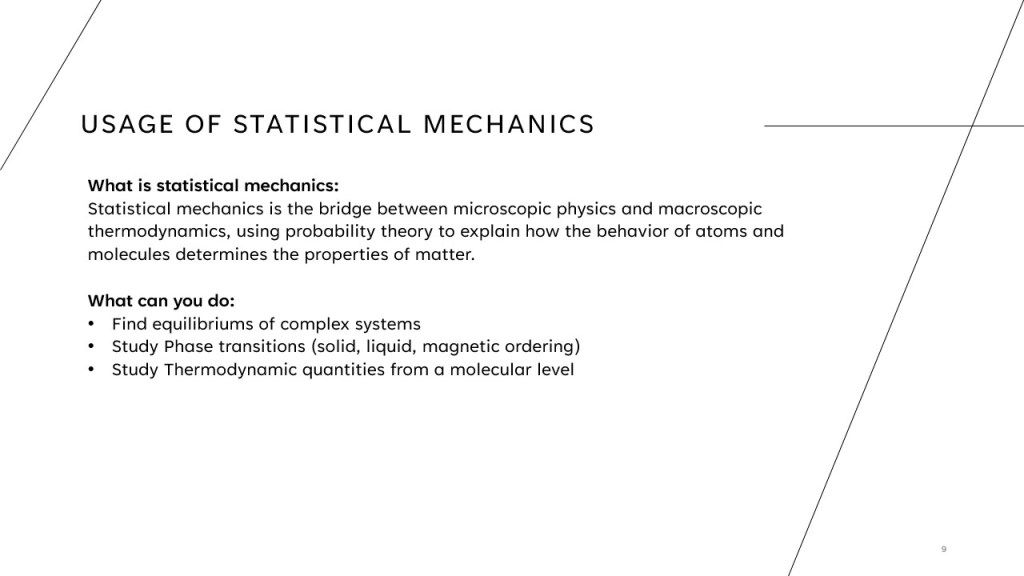
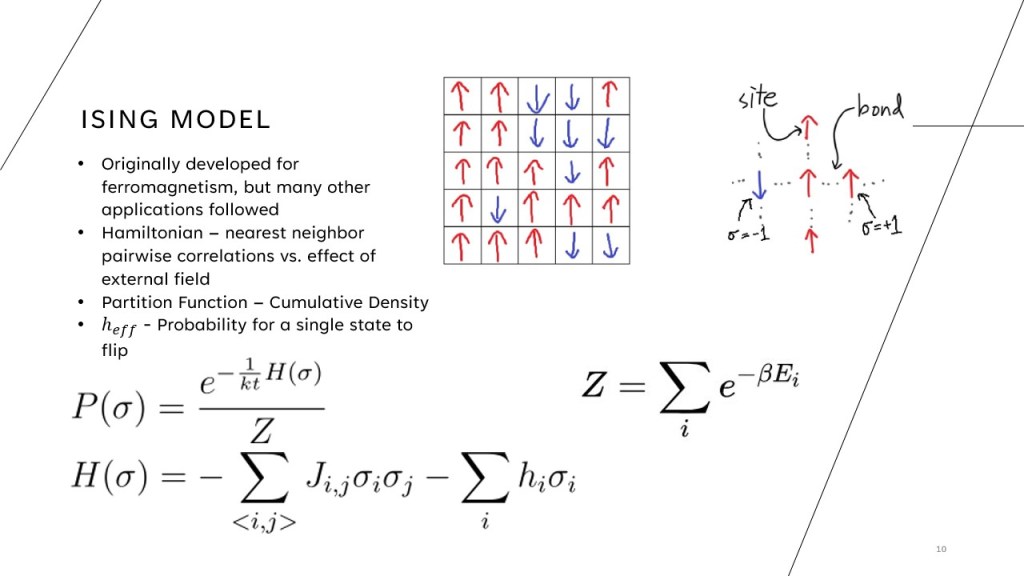
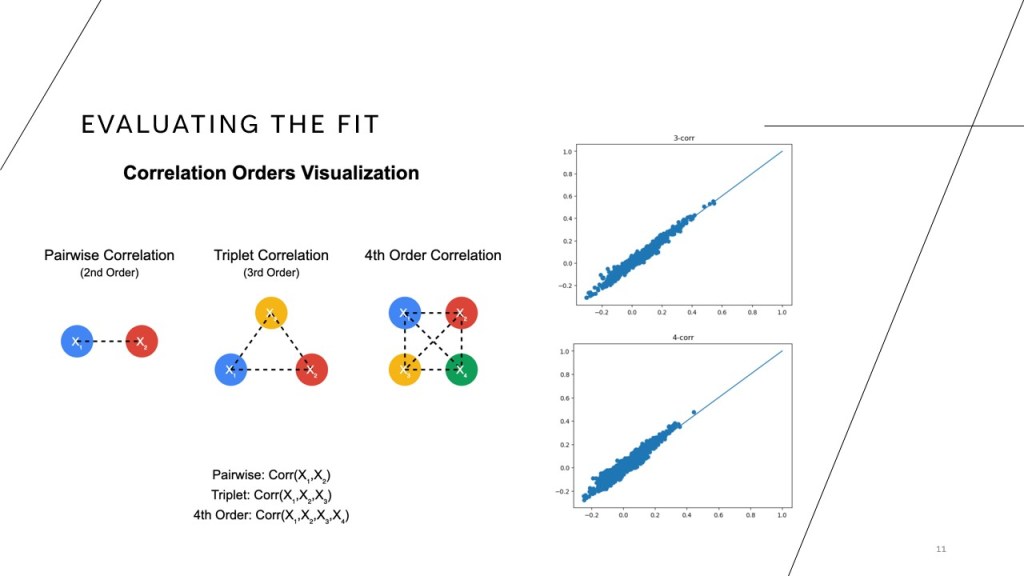
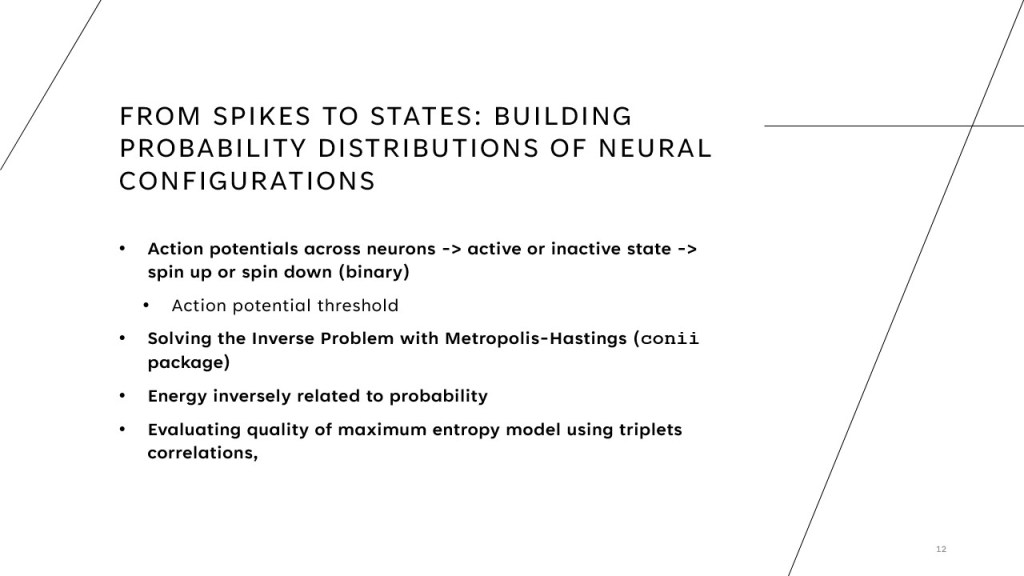
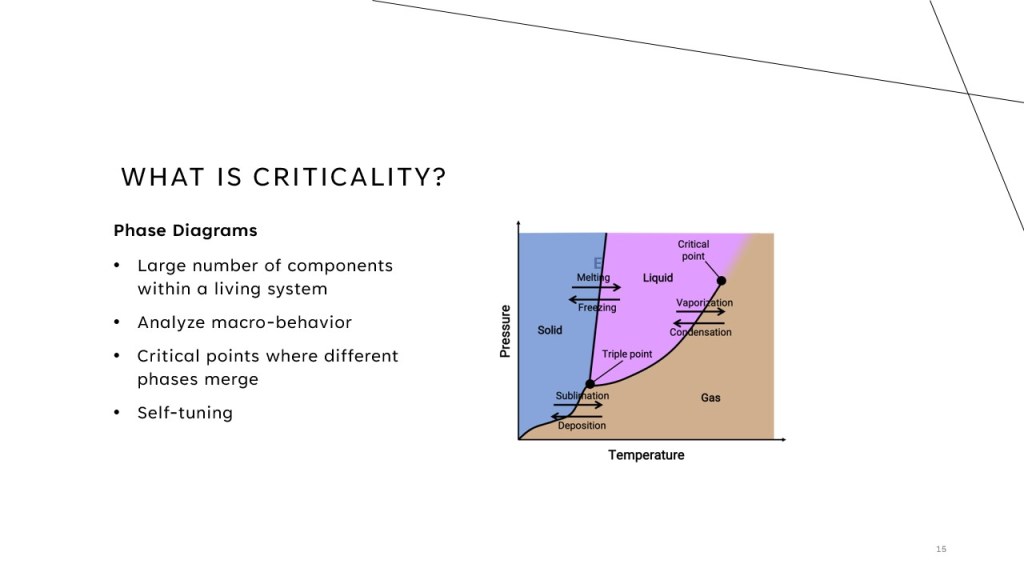
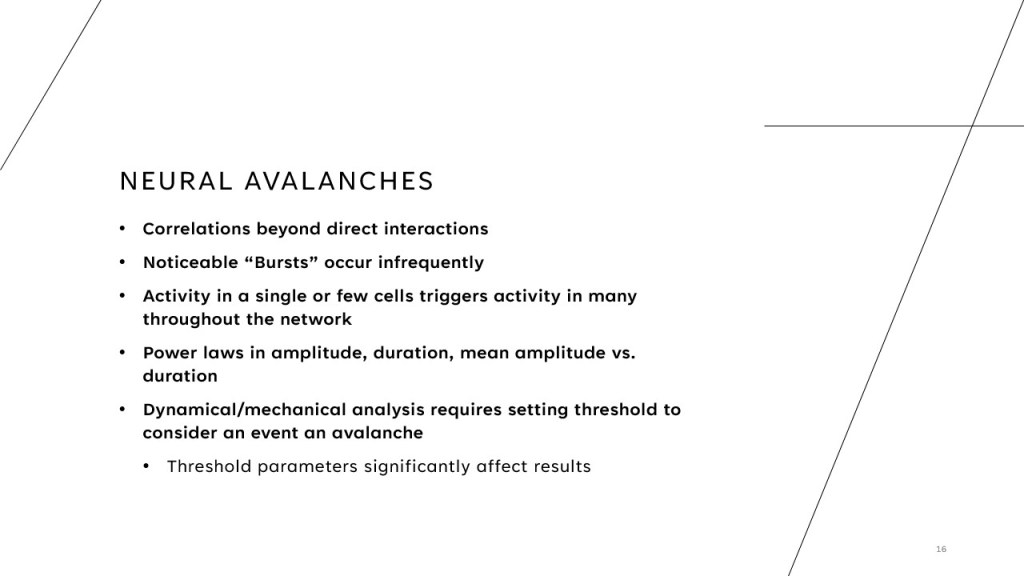
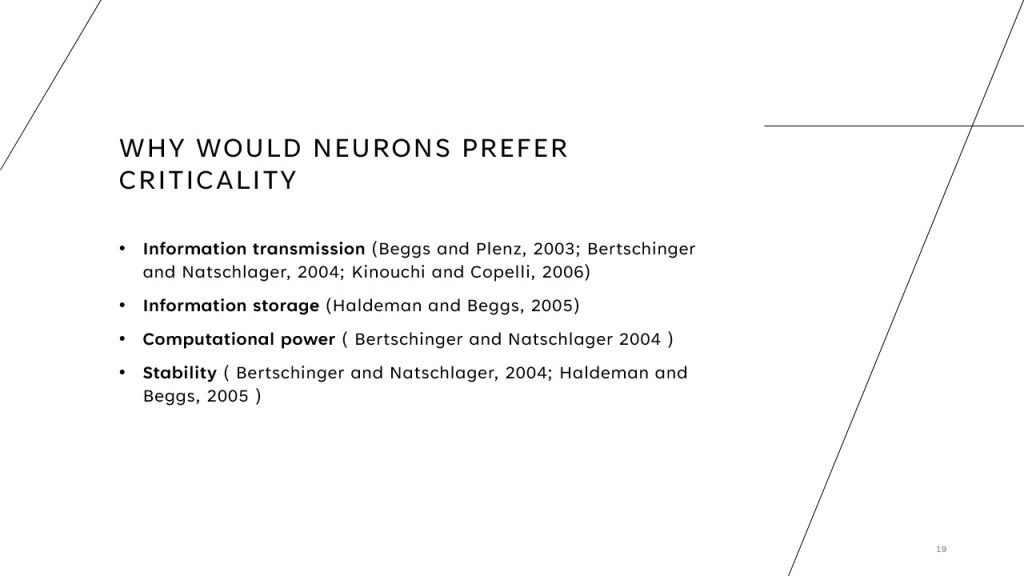
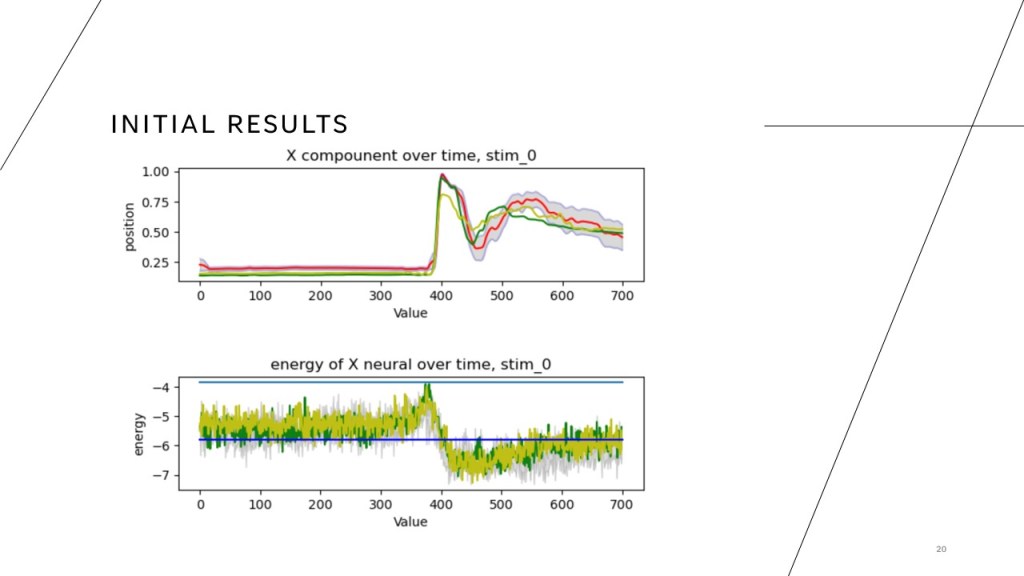
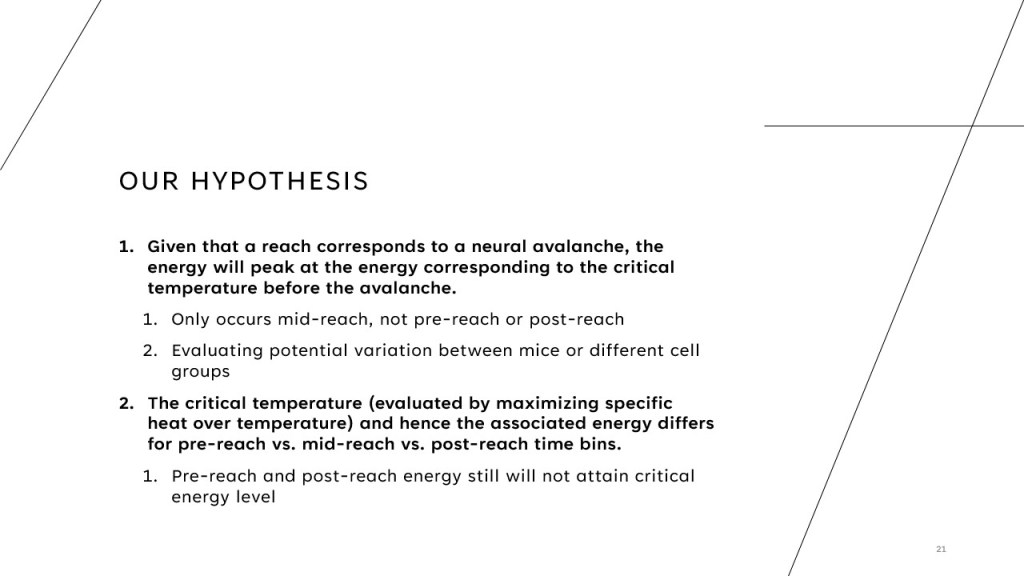
This work develops analytical and computational approaches to the Ising model, with a focus on interpreting critical behavior and interaction structure in neural systems.
In collaboration with ongoing research in my group, this framework is applied to the study of neural activity underlying motion and behavior.
Graduate Collaborators: Gunnar Enserro, Austin Long
Undergraduate Collaborators: Sadiqah Al-Masyabi, Hanad Ali, Gabriel Adas
Data provided by the Person Lab, Denman Lab, and Welle Lab at University of Colorado Anschutz Medical Campus.
Master’s Thesis Defense, M.S. Applied Mathematics University of Colorado Denver, April 2026
Front Range Applied Mathematics Student Conference University of Colorado Denver, March 2025
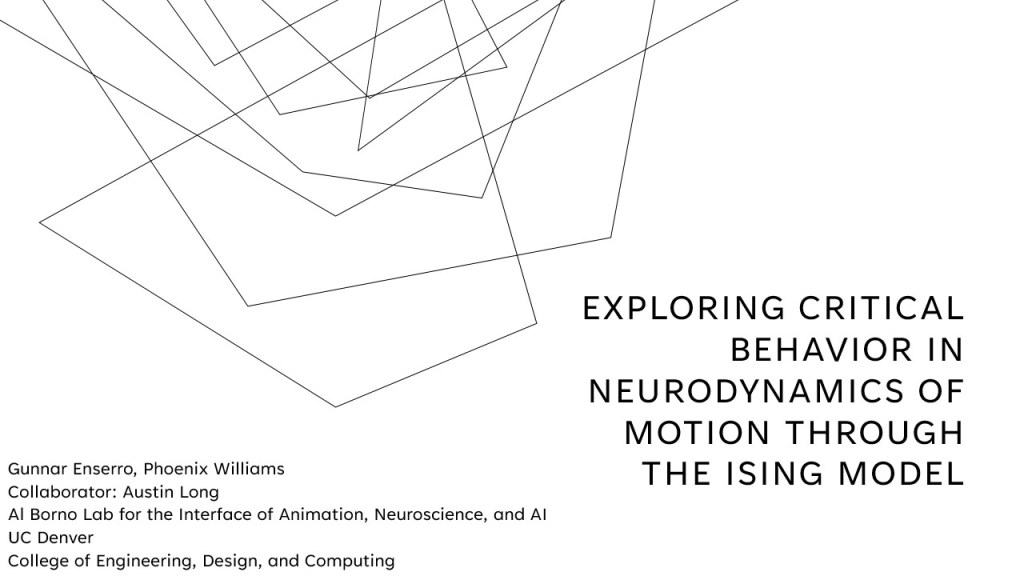
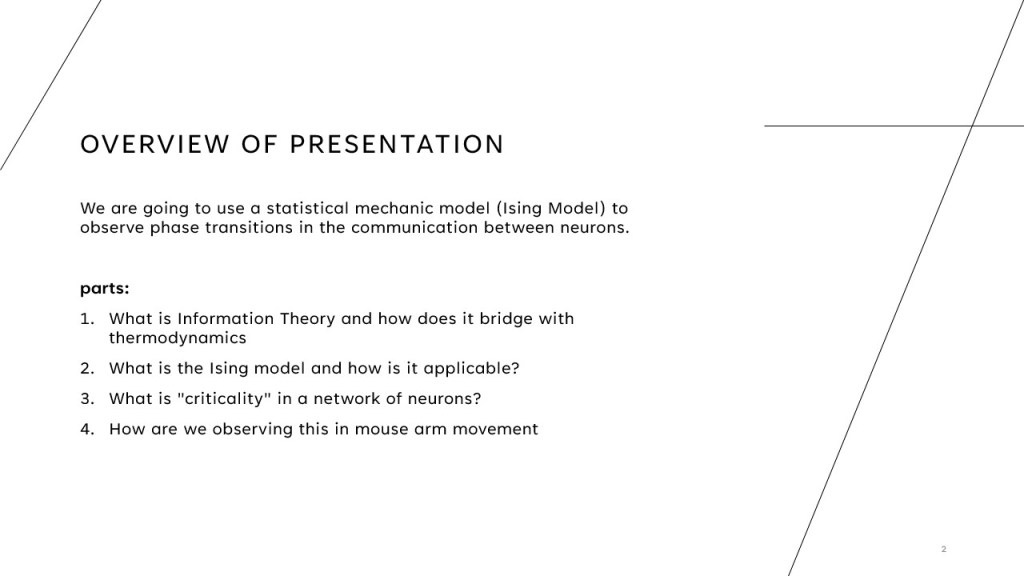
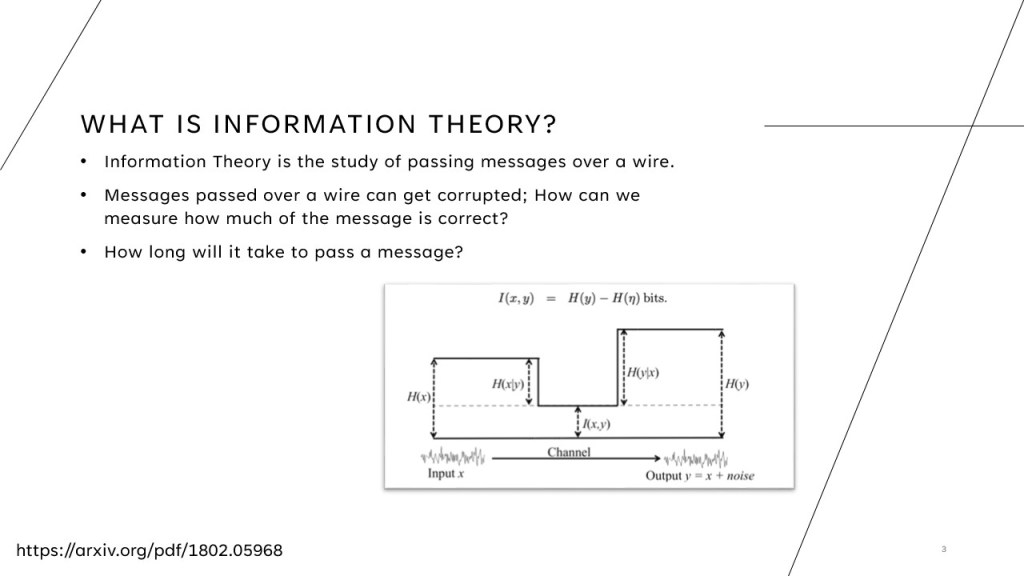
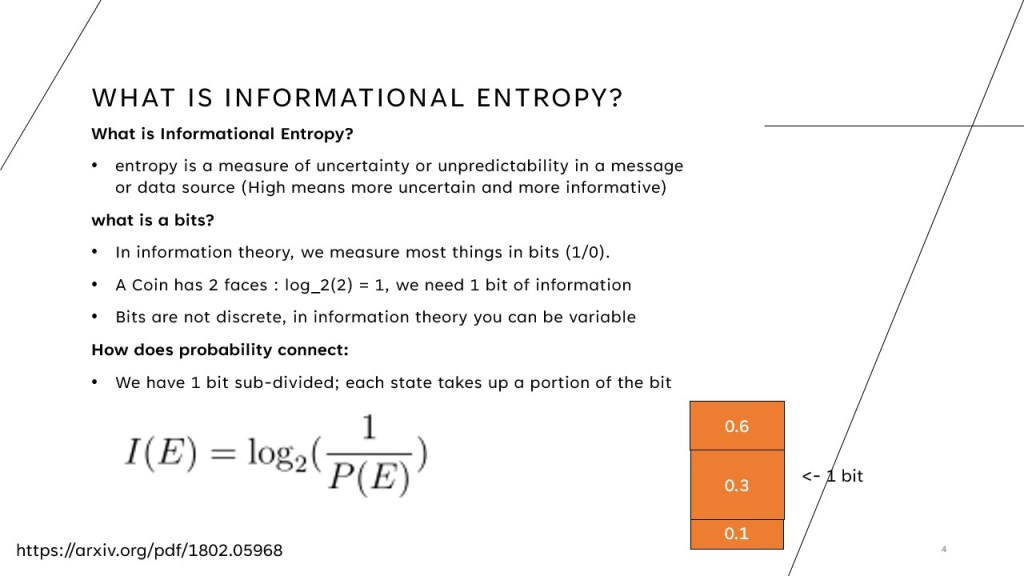
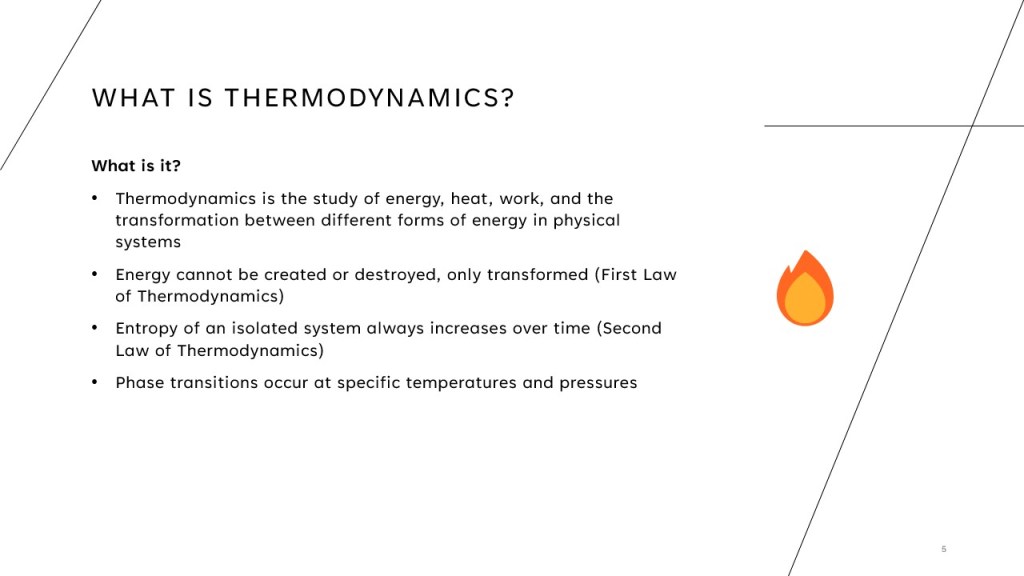
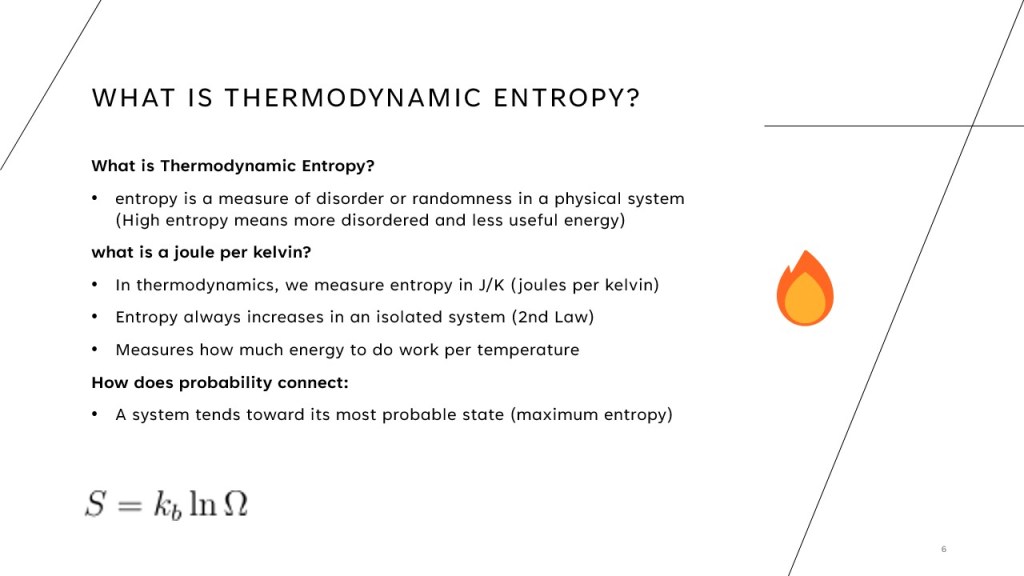
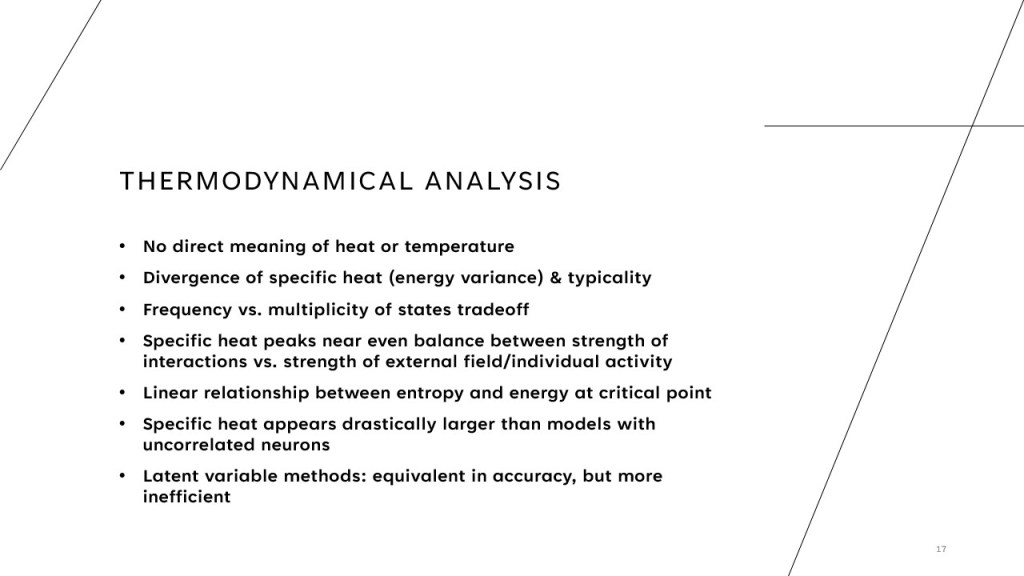
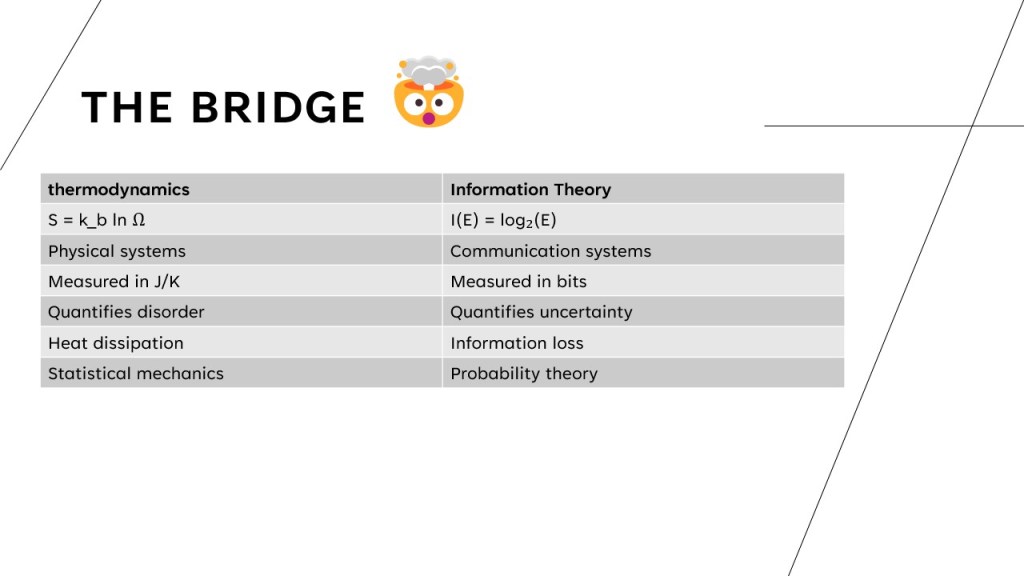


This work represents my primary research direction in applying tools from statistical physics to the analysis and interpretation of neural systems.
Graduate Work
Course-based and applied research projects in statistical modeling and data analysis.
A Time Series Analysis of Transgender Suicide Rates
Advised by Erin Austin, Ph.D.
Time series modeling of trends in suicide rates among transgender populations, with an emphasis on identifying temporal patterns and potential structural changes.
Course-based research project (Time Series Statistics)
Final Report, December 2025
Predicting Diabetes: Identifying Key Physical and Socioeconomic Risk Factors
Advised by Adam Spiegler, Ph.D.
Regression analysis of health and demographic data to identify significant predictors of diabetes risk, with a focus on interpretability and model performance.
Course-based research project (Applied Regression Analysis)
Final Report, December 2025
Class Presentation, December 2025
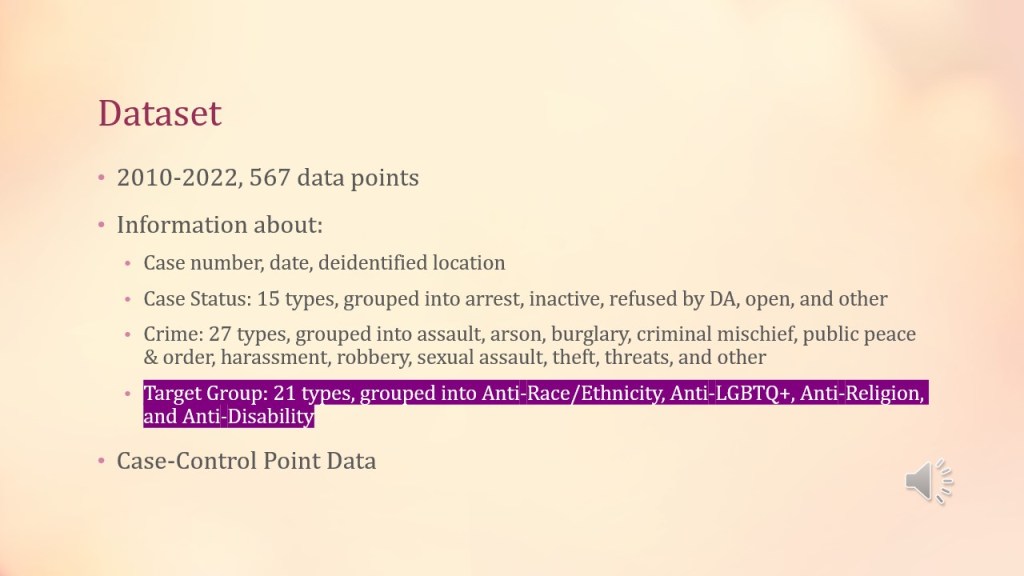
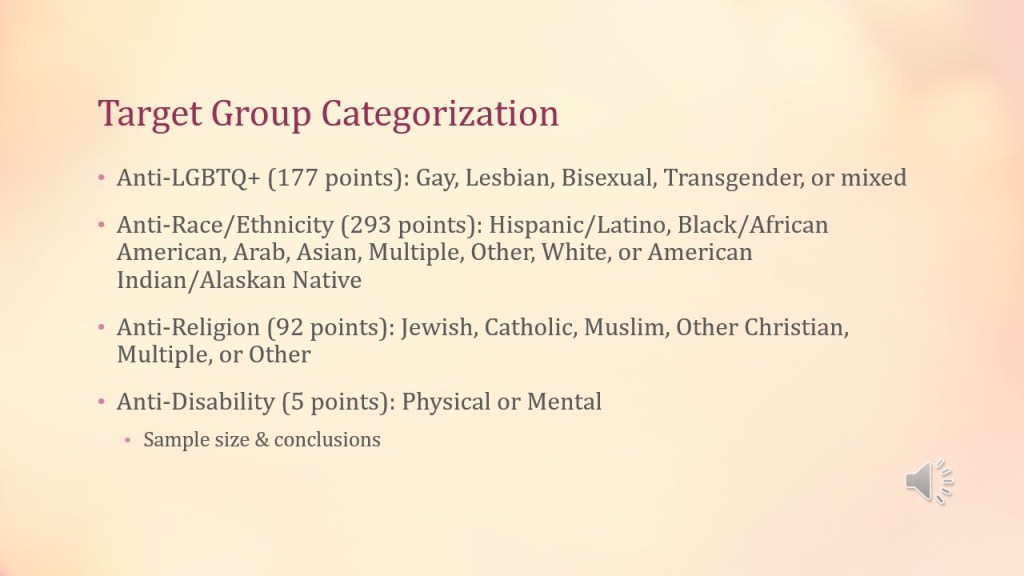
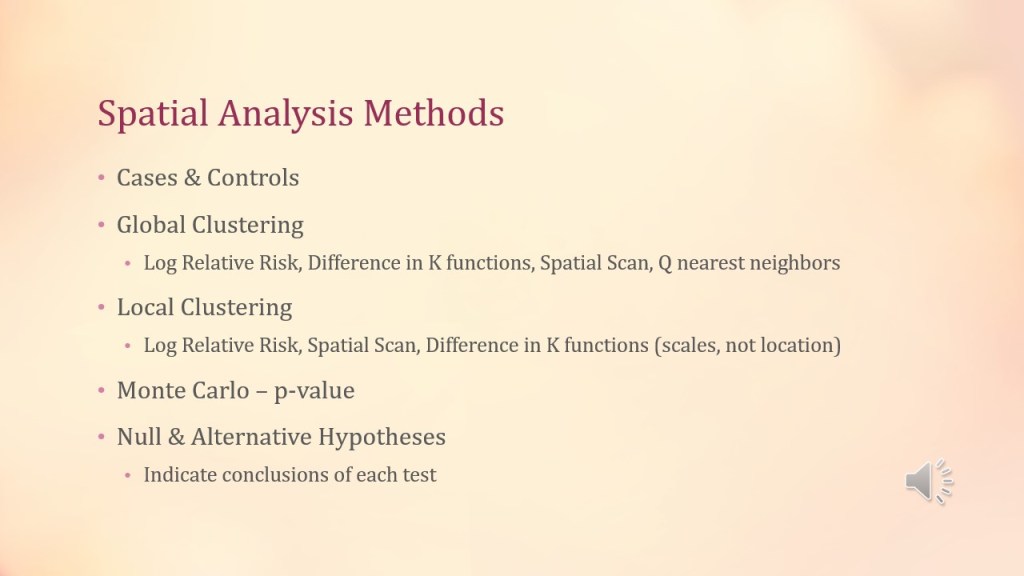
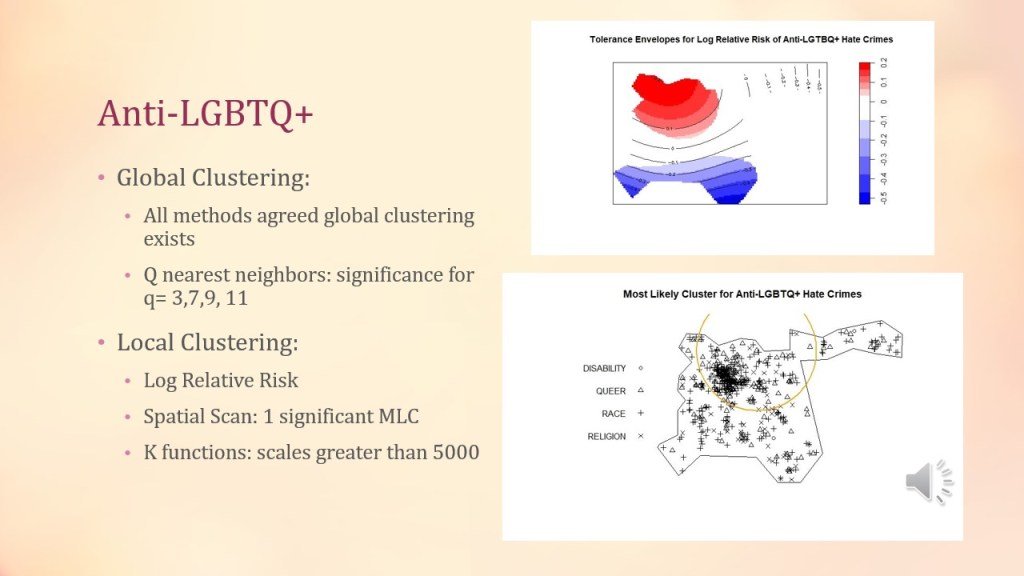
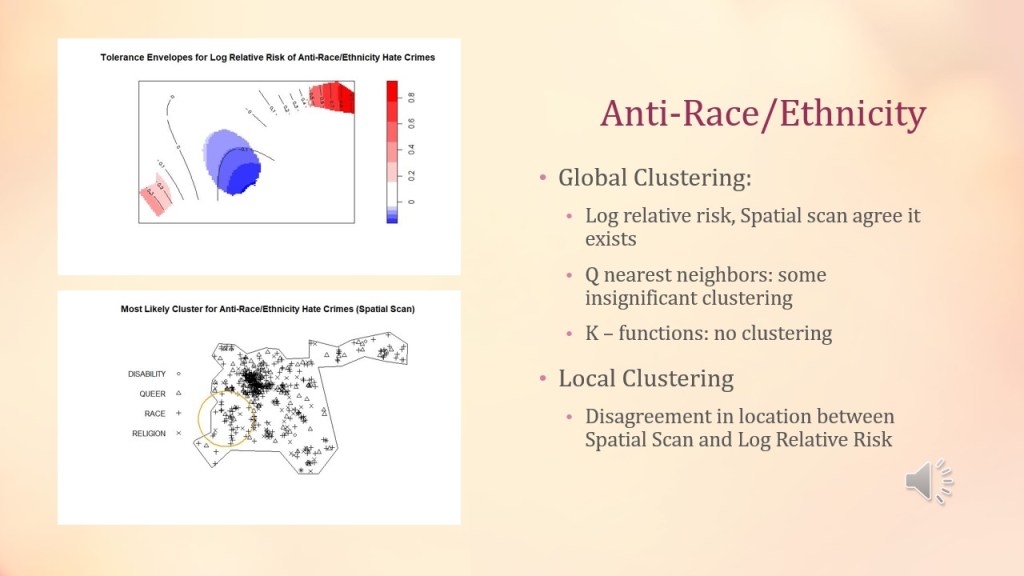
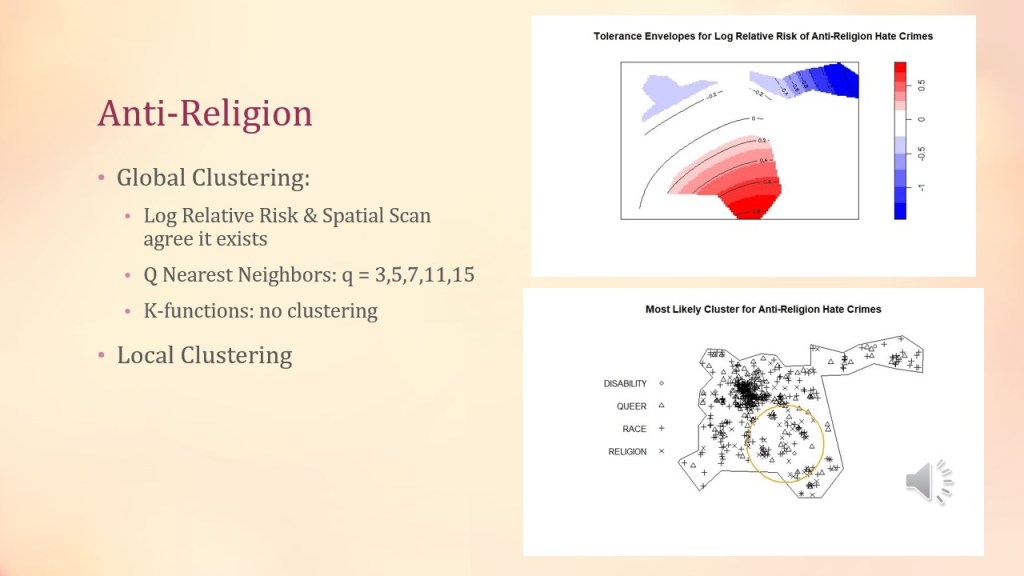
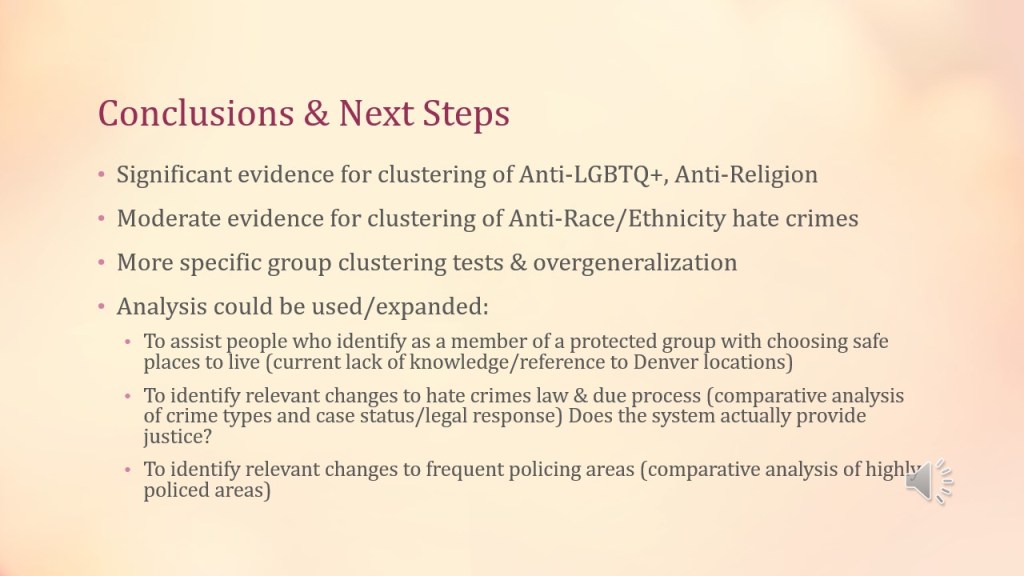
A Spatial Analysis of the Target Demographics of Hate Crimes
Advised by Joshua French, Ph.D.
Spatial statistical analysis of demographic patterns in hate crimes in Denver, with a focus on identifying geographic clustering and population-level disparities.
Course-based research project (Spatial Data Analysis)
Final Report, December 2023
Auraria Library Data 2 Policy Symposium, December 2023 Tied for Best in Presentation


These projects reflect my broader interest in applying statistical methods to analyze complex real-world systems and uncover meaningful patterns in data.
Undergraduate Research
Independent and collaborative research projects in mathematics, physics, and interdisciplinary analysis.
Statistical Analysis of Racial Bias in MPAA Ratings Systems
Advised by Matthew Bolton, Ph.D.
Statistical analysis of racial bias in film ratings systems, examining how representation and content influence MPAA classifications.
Awarded Jesuit Mission Fellowship (Research Grant)
This work reflects my broader interest in connecting statistical analysis with questions of representation and media interpretation.
Equivariant Cohomology and Intersection Theory on Grassmannian Manifolds
Advised by Eric Hogle, Ph.D.
Research in algebraic topology focused on equivariant cohomology and intersection theory on Grassmannian manifolds.
Senior Thesis
Undergraduate Collaborator: Jeb Kilfoyle
Pacific Inland Mathematics Undergraduate Conference, April 2020, Virtual
Increasing the Efficiency of Affordable Muon Detectors
Advised by Matthew Geske, Ph.D.
Experimental and computational physics research on improving muon detector efficiency, including Geant4 simulations and hardware optimization.
Funded by the Gonzaga Summer Research Program
Undergraduate Research Showcase Poster Presentation, October 2019
Hilbert Space Methods for Quantum Mechanics
Advised by Richard Cangelosi, Ph.D.
Literature-based research exploring Hilbert space formalism and its applications in quantum mechanics.
Course-based literature review (Real Analysis II)
Together, these projects reflect my development across mathematics, physics, and applied statistical modeling, forming the foundation for my current work in statistical physics and computational neuroscience.
 Phoenix Nenar Portfolio